Soft Washing vs. Pressure Washing: What's the Difference and When Do You Use Each?
Soft washing vs. pressure washing, explained plainly. Learn which method your roof, siding, and driveway actually need so you clean your Marietta home without damaging it.
If your roof has dark streaks or your siding is turning green, you've probably typed "pressure washing near me" and started calling around. Here's what most people find out too late: a pressure washer is the wrong tool for about half the surfaces on your house. Point 3,000 PSI at a shingle roof or old wood siding and you'll wreck it.
That's what soft washing is for. Knowing which of the two to use is most of this job, and using the wrong one is how houses get damaged.
What is pressure washing?
Pressure washing is what most people picture. A machine pushes water through a narrow nozzle at high pressure, and the force blasts off dirt, grime, and buildup. On the right surface it works great.
The catch is that the same force can gouge wood, blow water behind your siding, and strip paint. The more delicate the surface, the faster that happens.
What is soft washing?
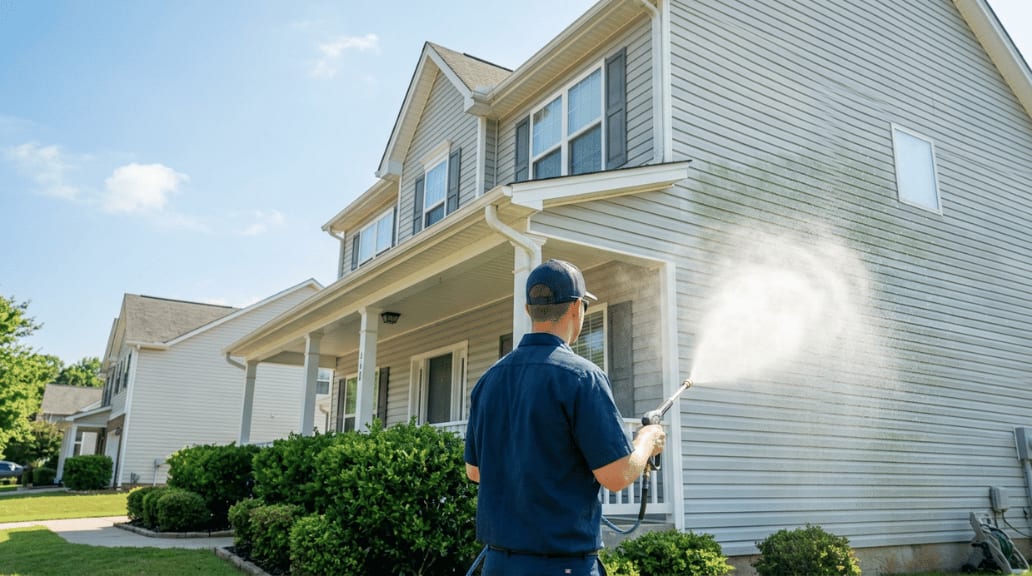
Soft washing goes the other way. It runs at low pressure, about like a garden hose, and lets a cleaning solution do the work. The solution breaks down the algae, mold, and mildew that grow on shaded, damp surfaces, and then I rinse it away.
Since there's almost no force involved, it's safe on surfaces a pressure washer would tear up. It also goes deeper. Pressure washing knocks the green off the surface, but a proper soft wash kills what's causing the stain, so it stays clean a lot longer.
That matters here. Georgia is humid and shady with a long warm season, which is exactly what algae wants. Every summer I watch the same green film creep across north-facing walls and roofs all over Cobb and Cherokee County. If you blast it off, it's back in a few months. Kill it and you usually get a couple of years.
When to use soft washing
Soft wash anything delicate, and anything with green or black growth on it. That's most of the vertical and up-top surfaces on a house:
- Roofs (those black streaks are algae, and pressure washing a roof voids most shingle warranties)
- Vinyl, wood, and painted siding
- Stucco and painted surfaces
- Fences and wooden decks
- Screens, skylights, and gutters
- Pool cages and pool decks
If you can dent it, splinter it, or force water behind it, it gets a soft wash. Siding is the one I see ruined most often, so I wrote up how pressure washing damages siding material by material.
When to use pressure washing
Pressure washing is for hard, flat surfaces that can take the force:
- Concrete driveways and sidewalks
- Brick and stone patios
- Paver walkways
- Garage floors
These build up stains a cleaning solution alone won't lift, like oil spots, tire marks, red clay, and years of ground-in grime. On concrete, the pressure is the point. I'll still pre-treat and set the pressure for the surface, but the machine does the heavy lifting.
The mistake that costs homeowners the most
Using the wrong method. Every season I get calls from folks who rented a machine, went at their roof or their soft wood siding, and ended up with stripped paint, splintered boards, or water inside the wall. A rental pressure washer doesn't come with a label that says "this will destroy your shingles."
Anybody can rent the machine. Knowing how much pressure a surface can take, what to mix, and how to keep your plants and windows safe while you work is what takes experience. Get it wrong and the repair bill makes the cleaning look cheap.
How I figure out which one your home needs
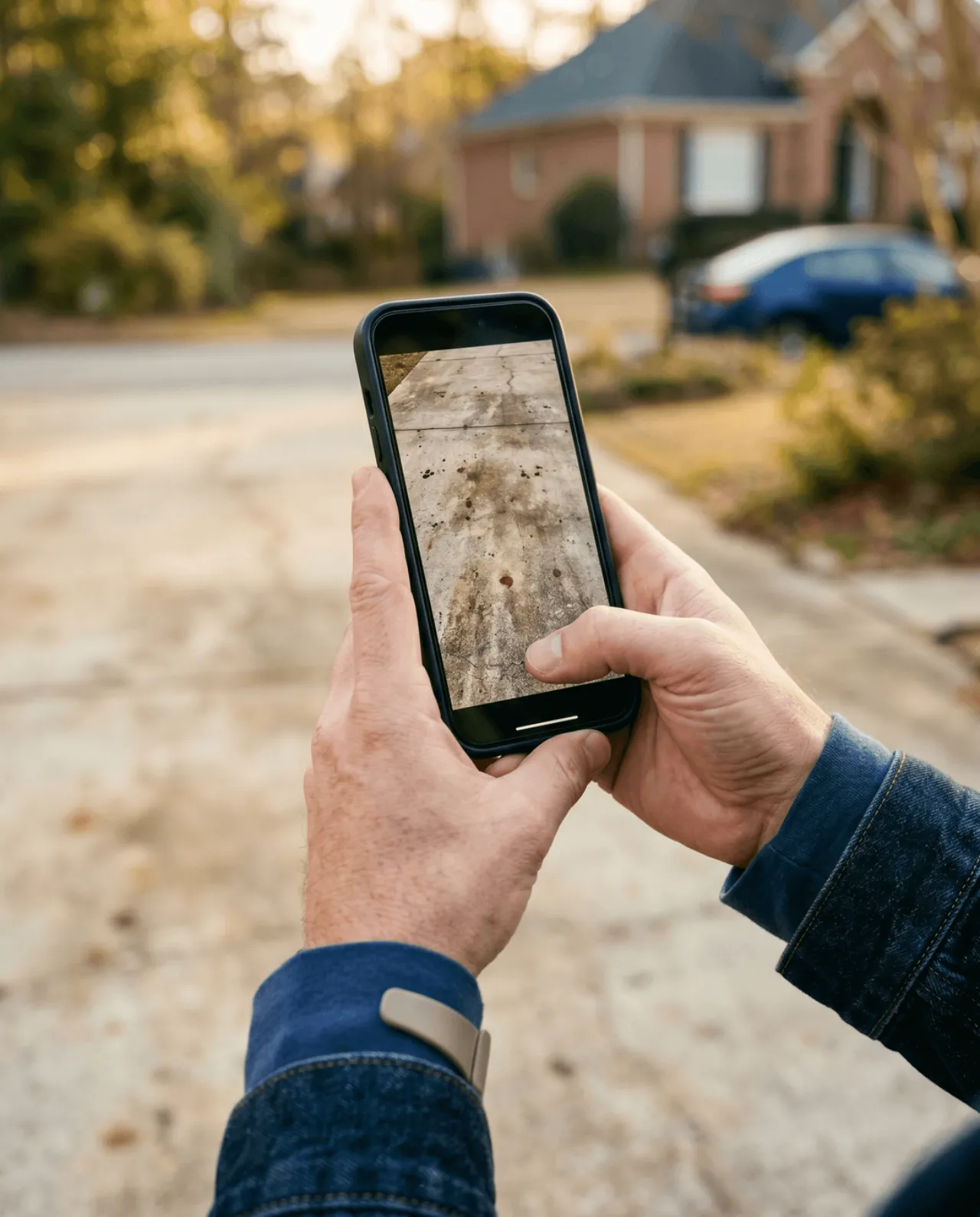
I don't guess. I pull your house up on Google Earth, look at what you've got, and tell you what each surface needs. Roof and siding almost always get soft washed. Driveway and patio usually get pressure washed. A lot of homes need both, and I do it all in one visit so the whole outside of the house matches.
Wes's Waterworks is family-owned and owner-operated here in Marietta. I clean your place the way I'd clean my own, which means the right method on every surface and nothing damaged when I pull out of the driveway.
The short version
Soft washing and pressure washing are two tools for two different jobs. Soft washing is the low-pressure, solution-based method for roofs, siding, and anything delicate. Pressure washing is for concrete and other hard surfaces. The trick is matching the method to the surface, and I do that on every job.
If your house is looking green, streaked, or just tired, call or text me at 678-984-9542, or send me the details here. I quote off Google Earth, so you'll have a real number the same day without anyone coming out. If you want a ballpark first, here's what a house wash usually runs.
Serving Marietta, Kennesaw, Acworth, Woodstock, Powder Springs, Smyrna, and the rest of Cobb, Cherokee, Paulding, Fulton, and Bartow counties. See residential services for everything I clean, or the service areas page for the full map.
Common questions
Is soft washing safe for roofs? Yes, and it's the only way a roof should be cleaned. Pressure washing strips the protective granules off shingles and usually voids the warranty. A soft wash kills the algae without scouring the shingles.
Does soft washing damage plants? Not when it's done right. I wet down the landscaping before and after and mix the solution at the right strength. Keeping your yard alive is part of the job.
How long does soft washing last? Usually a year or two, depending on how much shade and moisture the surface gets. It kills the algae and mildew instead of knocking them off, so it lasts a lot longer than pressure washing alone.
Do I need both soft washing and pressure washing? A lot of homes do. Siding and roof get soft washed, and the driveway and walkways get pressure washed. I do both in one visit.
Want it done right, without the damage?
We answer fast — usually within the hour. Call or text anytime, we're available 24/7.
Free • No obligation • Same-day response • Licensed & insured